
15 Oct 2026
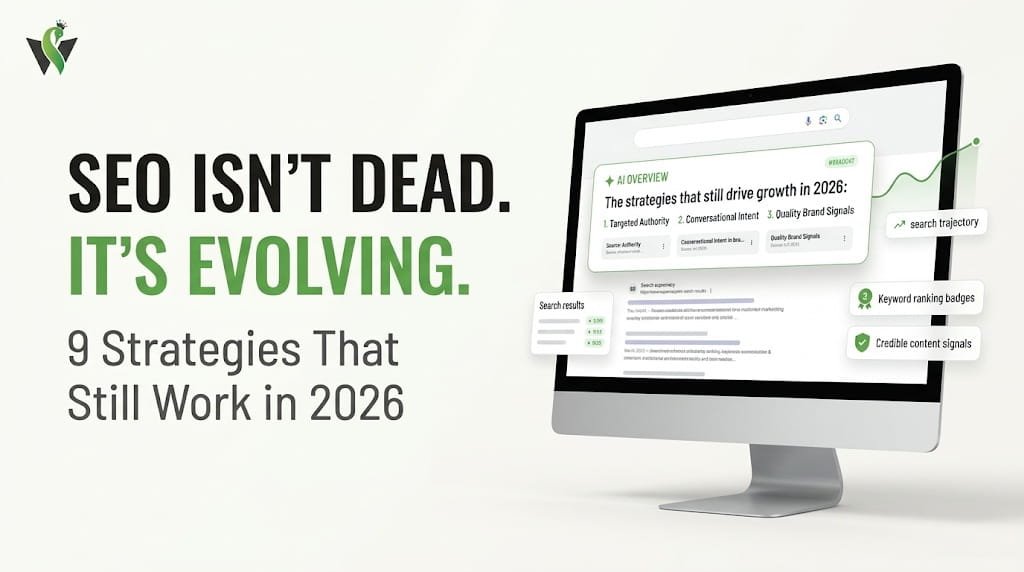
SEO in the Age of AI Overviews: 9 Strategies That Still Work in 2026
By Web Supremacy | October 15, 2026
Search engine optimization is changing faster than ever. Google now uses AI to summarize information directly in search results, while tools such as ChatGPT, Gemini, and Perplexity help people discover answers without always visiting traditional websites.
For business owners, this creates an important question: if search engines can answer questions themselves, why would anyone click through to your website?
The answer is that SEO is not dead, but the way businesses earn visibility, traffic, and customers is evolving.
Traditional search rankings still matter, but businesses must also focus on becoming credible sources, building recognizable brands, answering complex customer questions, and creating content that offers value beyond a quick AI-generated summary.
Google’s official guide to optimizing for generative AI features in Search confirms that established SEO best practices remain relevant to AI-powered search experiences. It also emphasizes useful, distinctive content rather than shortcuts designed specifically for AI.
In this guide, Web Supremacy explores nine practical SEO strategies that businesses can use in 2026 to strengthen organic visibility, build trust, and turn search opportunities into meaningful business growth.
What Are Google AI Overviews and How Do They Affect SEO?
Google AI Overviews are AI-generated summaries that appear within eligible search results. They combine information to help users understand a topic and can provide links to websites that support further exploration.
For example, someone searching for “how to choose a web development agency” might see an AI-generated overview explaining important considerations before encountering individual websites.
This changes how people discover businesses online.
Instead of relying exclusively on traditional search listings, users may encounter summarized information, source links, related questions, videos, and other search features.
The three biggest changes for businesses
1. Fewer clicks for some searches
When a search result answers a question directly, some users have less reason to visit another website.
A 2025 Pew Research Center study found that users clicked traditional search result links less frequently when an AI summary appeared in the Google results it analyzed. The study examined U.S. browsing activity during March 2025, so its findings should not be treated as a universal measurement of every market or current query.
2. Greater importance of credible sources
AI-powered search experiences can present links to sources that help users explore a topic further. Publishing accurate, useful information gives your website a reason to be considered, although no particular format guarantees a citation.
3. More emphasis on business outcomes
A website visit is valuable, but a qualified lead, consultation request, or sale is often more valuable to a business.
The objective is not simply to appear in search results. It is to help the right people discover your business, understand your expertise, and take the next step.
9 SEO Strategies That Still Work in 2026
1. Publish Original Content That Offers Something New
One of the biggest mistakes businesses make is publishing articles that repeat information already available on dozens of websites.
Consider two articles about website design.
The first explains what web design means, lists common design principles, and ends with generic advice.
The second examines a real website redesign, explains the decisions behind the new layout, compares the original and updated user experience, and shares measurable results where reliable data is available.
The second article gives readers more specific reasons to engage with the content.
AI can summarize widely available information, so businesses should look for opportunities to contribute something distinctive.
How to put this into practice
- Share lessons from actual projects.
- Include original screenshots, illustrations, or demonstrations.
- Explain why particular decisions were made.
- Present original research or survey findings when available.
- Discuss common mistakes and how to solve them.
- Provide examples relevant to your target audience.
For Web Supremacy, an article about improving a business website could include a genuine design breakdown explaining how navigation, typography, page structure, and calls to action support a clearer user experience.
Never invent project results or customer experiences to make an article appear authoritative.
Google’s people-first content guidance encourages content that provides original information, demonstrates relevant knowledge, and genuinely helps its intended audience.
The key principle: Do not just explain what everyone already knows. Help readers understand something they could not easily learn from a generic summary.
2. Build Topical Authority Around Your Core Services
Publishing one article about every trending topic is not necessarily an effective SEO strategy.
A stronger approach is to build a useful collection of connected content around the subjects most relevant to your business.
This is commonly called topical coverage or topical authority.
For example, a digital agency offering website development and SEO could build a content cluster around business website performance.
Its articles might cover:
- How to improve website conversion rates.
- Why website loading speed matters.
- How to design effective service pages.
- How to create landing pages for advertising campaigns.
- How mobile usability affects customer experience.
- How to measure website performance.
- When a business should redesign its website.
A central guide can introduce the overall subject, while supporting articles explain individual problems in greater depth.
Link these pages together wherever doing so helps readers discover relevant information.
Why this approach matters
Connected content helps visitors explore a subject without repeatedly returning to search results. It also helps search engines understand the relationship between your pages.
However, publishing a large number of articles does not automatically establish authority. Each page should have a clear purpose and provide meaningful value.
For Web Supremacy, prioritize subjects directly related to your services rather than creating content solely because a keyword appears popular.
3. Optimize for Search Intent, Not Just Keywords
Keywords remain useful, but understanding why someone searches is just as important as identifying the words they use.
Consider these three searches:
- “What is SEO?”
- “SEO vs. paid advertising for small businesses”
- “SEO agency for an e-commerce business”
Although all three relate to digital marketing, they reflect different needs.
The first person wants an explanation. The second is comparing options. The third may be looking for a service provider.
Creating the same type of article for all three searches would ignore these differences.
Match your content to the user’s goal
Informational searches: Publish explanations, tutorials, and practical guides.
Comparison searches: Create balanced comparisons, decision-making guides, and discussions of advantages and limitations.
Commercial searches: Provide detailed service pages, relevant case studies, pricing information where possible, and clear next steps.
Transactional searches: Make it easy for users to purchase, book, request a quote, or contact your business.
For example, a person searching for “website redesign cost for a small business” probably needs more than a definition of website redesign. They may want to understand pricing factors, project scope, timelines, and what affects the final quotation.
Addressing those questions makes your content more useful to people who are closer to making a decision.
4. Structure Your Content for People and AI Search
Clear content structure improves readability and helps search systems interpret the information on a page.
It also makes it easier for readers to find the specific answer they need without reading every paragraph.
However, there is no special heading formula that guarantees placement in an AI Overview.
The goal is to communicate information clearly and accurately.
Use a practical content structure
Start with a direct answer. Introduce the problem and explain the main takeaway early in the article.
Use descriptive headings. Organize the article into meaningful H2 and H3 sections that accurately describe their content.
Explain unfamiliar terms. Define technical language before using it extensively.
Use lists and tables when appropriate. These formats can make comparisons, instructions, and checklists easier to understand.
Support important claims. Link to reliable sources when discussing research, technical standards, or specific facts.
Answer related questions naturally. Include relevant FAQs when they address genuine reader concerns.
For example, an article about website speed could begin with a concise explanation of why performance matters, followed by sections covering measurement tools, common causes of slow pages, and practical fixes.
Avoid turning every paragraph into a short answer designed solely for extraction. Readers still need explanations, context, examples, and useful detail.
5. Strengthen Your Technical SEO Foundations
AI-powered search does not remove the need for a technically sound website.
Search engines still need to discover, crawl, process, and index eligible pages before those pages can appear in relevant search experiences.
A technically weak website can undermine otherwise excellent content.
Your technical SEO checklist
- Crawlability: Ensure important pages can be accessed by the appropriate search crawlers.
- Indexing: Check that valuable pages are eligible for indexing and are not accidentally blocked.
- Mobile usability: Make navigation, text, forms, and buttons work properly on smaller screens.
- Page speed: Identify performance problems and improve loading and responsiveness.
- Internal links: Connect related pages using descriptive, useful links.
- Canonical URLs: Help search engines identify the preferred version of duplicate or similar pages.
- XML sitemap: Maintain an accurate sitemap to help search engines discover important URLs.
- HTTPS: Protect connections between your website and its visitors.
Use Google Search Console to monitor search performance and identify relevant indexing issues. You can also use Google PageSpeed Insights to evaluate performance.
Google’s official documentation explains that pages must meet the applicable technical requirements to be eligible for supporting links in AI Overviews and AI Mode. Meeting those requirements does not guarantee that a page will be selected.
Technical SEO is not glamorous, but it provides the foundation on which your content strategy depends.
6. Use Structured Data Correctly
Structured data, often implemented through schema markup, helps search engines understand information on your pages.
Depending on the content, relevant schema types may include:
Articlefor editorial content.Organizationfor information about your business.LocalBusinessfor eligible local business information.Productfor product pages.BreadcrumbListfor breadcrumb navigation.
For example, an article published by Web Supremacy can use appropriate article structured data to identify its headline, author, publication date, and other supported properties.
The information in the markup should accurately reflect the visible page content.
Does schema markup guarantee AI citations?
No.
Structured data can clarify information, but it does not guarantee higher rankings, a featured result, or inclusion in an AI-generated answer.
Likewise, adding FAQ schema to a page does not guarantee that Google will display an FAQ rich result.
Follow Google’s structured data guidelines and use the Rich Results Test to check eligible markup.
Implement schema because it accurately describes your content—not because you expect it to act as a shortcut to AI visibility.
7. Build Brand Authority Beyond Your Website
Your website is an important part of your digital presence, but it is not the only place where potential customers discover or evaluate your business.
People may encounter your brand through industry publications, professional communities, review platforms, social media, videos, and recommendations.
A consistent, credible presence across relevant channels helps people understand what your business does and why it may be worth considering.
Ways to strengthen your online presence
Earn relevant editorial mentions. Contribute useful insights to publications that serve your industry.
Publish useful social content. Share practical tips, project breakdowns, and educational videos that demonstrate your expertise.
Collect genuine customer reviews. Invite real customers to share honest feedback on appropriate platforms.
Maintain accurate business information. Keep your company name, contact details, and service descriptions consistent.
Build relationships in your industry. Participate in relevant events, communities, podcasts, and professional discussions.
Create recognizable brand content. Develop a consistent identity and publish material that your audience can associate with your business.
For a digital agency, this could include explaining how a website redesign addresses a business problem, sharing an educational post about landing pages, or publishing a detailed guide to improving online visibility.
Do not confuse brand building with buying links or generating artificial mentions. Focus on earning attention through useful contributions and credible relationships.
8. Adapt Your Content for AI-Powered Search Experiences
People increasingly use conversational tools to research products, compare services, explore ideas, and find recommendations.
This has encouraged interest in terms such as generative engine optimization (GEO) and answer engine optimization (AEO).
These terms describe approaches to improving how content can be discovered, understood, and referenced by AI-powered systems. Their definitions vary, and neither represents a guaranteed ranking method.
The practical work overlaps substantially with established SEO.
What should businesses do?
Make important information easy to find. Clearly describe your services, target audience, location where relevant, and business expertise.
Provide specific answers. Explain real problems, trade-offs, processes, and decision-making factors.
Use accurate and consistent facts. Make sure names, dates, specifications, and claims are reliable.
Cite trustworthy evidence. Support factual claims with relevant sources instead of making unsupported statements.
Keep important pages current. Update outdated information when products, services, technical guidance, or market conditions change.
Ensure search access is configured appropriately. Check that relevant pages are accessible to the search systems you want to reach, subject to their technical requirements and your site settings.
Monitor actual visibility. Investigate whether your brand appears for relevant questions and whether that visibility brings useful visitors or inquiries.
Google’s guidance on AI features in Search states that there are no additional technical requirements or special optimizations needed specifically for inclusion in AI Overviews or AI Mode beyond the applicable Search requirements and established best practices.
That means businesses should be cautious about anyone promising guaranteed AI citations through secret prompts, special formatting, or a single technical trick.
The most sustainable approach is to publish helpful, reliable information that deserves to be discovered.
9. Measure Leads and Revenue, Not Just Rankings
Rankings, impressions, and clicks are useful indicators, but they do not tell the whole story.
A page may attract thousands of visitors who have little interest in your services. Another page may receive fewer visits but generate valuable inquiries from people who are ready to hire you.
For a business website, SEO should ultimately support meaningful business outcomes.
What should you measure?
| Metric | What it tells you |
|---|---|
| Search impressions | How often your pages appear in search results |
| Organic clicks | How many clicks your pages receive from organic search |
| Click-through rate | How often people click after seeing your search listing |
| Qualified leads | How many inquiries match your target customer profile |
| Conversion rate | How frequently visitors complete a desired action |
| Lead-to-customer rate | How often leads become paying customers |
| Organic revenue | Revenue attributable to organic search, where measurement permits |
Google Search Console can help you review search queries, impressions, clicks, and click-through rates. Analytics and your customer relationship management system can help you understand what happens after a visitor reaches your website.
AI-related search reporting and attribution capabilities can evolve, so use the reporting available in your own tools and clearly distinguish measured data from estimates.
For example, suppose your organic traffic declines after a search results change, but qualified inquiries remain stable. That may indicate the remaining traffic is more valuable, although you should investigate the data before reaching a conclusion.
Conversely, rising traffic combined with falling inquiries could indicate a mismatch between search intent, landing page content, and your offer.
The objective is not to collect impressive SEO numbers. It is to understand whether your organic visibility helps your business grow.
A Practical 30-Day SEO Action Plan for 2026
Understanding SEO is one thing. Knowing where to begin is another.
Use this four-week plan to prioritize improvements without attempting to change everything at once.
Week 1: Audit Your Existing Website
- Review your most important service and blog pages.
- Identify pages losing clicks or attracting irrelevant traffic.
- Check indexing, internal links, and mobile usability.
- Test your key landing pages and contact forms.
- Review which organic pages generate qualified inquiries.
Goal: Identify the most important opportunities and technical problems.
Week 2: Improve Your Best Content
- Update outdated information and broken links.
- Add original examples and useful explanations.
- Improve headings and page structure.
- Answer important questions your customers ask.
- Strengthen internal links to relevant service pages.
Goal: Make existing content more useful, accurate, and relevant.
Week 3: Build Topic Coverage and Brand Visibility
- Choose a core subject connected to your services.
- Create a list of supporting article ideas.
- Connect related content with helpful internal links.
- Publish useful educational content on relevant channels.
- Identify legitimate opportunities for industry mentions and collaborations.
Goal: Build a more coherent and recognizable online presence.
Week 4: Measure, Learn, and Prioritize
- Compare search performance with your previous reporting period.
- Review qualified inquiries and conversions.
- Identify pages with strong impressions but weak click-through rates.
- Check whether your content is attracting the right audience.
- Choose the next improvements based on evidence.
Goal: Establish a repeatable process for ongoing improvement.
Four weeks will not guarantee ranking improvements or AI citations. However, this plan can help you establish a clearer SEO process and make more informed decisions about where to invest your time.
Common AI SEO Mistakes to Avoid
As AI-powered search becomes more prominent, businesses may be tempted to adopt shortcuts that promise fast results.
Be careful with these approaches.
Publishing hundreds of unedited AI-generated articles: Large volumes of repetitive, low-value content can waste resources and may violate Google’s spam policies when produced to manipulate search rankings.
Repeating keywords unnaturally: Keyword stuffing makes content harder to read and is not a sustainable optimization strategy.
Adding schema that does not match the page: Inaccurate structured data can undermine eligibility for supported search features.
Buying low-quality backlinks: Manipulative link schemes can create search policy risks rather than build genuine authority.
Chasing every AI SEO trend: New terminology does not automatically mean a new ranking factor exists.
Ignoring conversions: Search visibility is less useful when the website fails to explain your services or make contacting your business easy.
Treating AI citations as guaranteed: No legitimate SEO strategy can promise that a specific page will appear in every AI-generated answer.
Google’s guidance on generative AI content makes an important distinction: AI can assist with research and content creation, but publishing large amounts of content without adding value can fall under scaled content abuse.
Use AI as a tool to improve research, organization, and productivity—not as a replacement for accuracy, original insight, and editorial judgment.
Frequently Asked Questions About SEO and AI Overviews
Is SEO still worth it in 2026?
Yes. Organic search can still help businesses reach people who are researching problems, comparing solutions, and looking for products or services. The best approach combines established SEO practices with useful content, technical quality, brand credibility, and conversion measurement.
Do Google AI Overviews reduce website traffic?
They can reduce clicks for some queries because users may find enough information in the search results themselves. The effect varies by topic, search intent, audience, and query. Monitor your own Search Console data rather than assuming every page will experience the same impact.
How can I get my website featured in Google AI Overviews?
There is no guaranteed method. Make your pages eligible for Google Search, follow its policies, provide useful and original information, and maintain strong technical SEO. Clear structure and accurate content can help users and search systems understand your pages, but inclusion remains Google’s decision.
What is generative engine optimization (GEO)?
GEO is a term for approaches intended to improve the discoverability and potential citation of content in generative AI systems. It overlaps substantially with traditional SEO, including content quality, technical accessibility, clear communication, and credible information.
Should businesses stop publishing blog posts because of AI?
No. Businesses should stop publishing articles that offer little value. A well-researched guide, original case study, practical tutorial, or detailed comparison can still help customers make decisions and discover a business’s expertise.
Does structured data guarantee better AI search visibility?
No. Structured data helps search engines interpret supported information, but it does not guarantee rankings, AI citations, or rich results. Use accurate markup that reflects the content of your pages.
Should I optimize for ChatGPT, Gemini, and Perplexity separately?
Start with a strong foundation: helpful content, accurate information, accessible pages, and clear explanations of your expertise. Then monitor relevant AI search experiences where practical. Different systems may use different sources and selection methods, so visibility in one does not guarantee visibility in another.
Final Thoughts: Build SEO for Visibility, Trust, and Growth
The age of AI Overviews does not make SEO irrelevant. It makes it more important to understand what your audience needs and how your website can provide genuine value.
Businesses that rely entirely on generic articles, keyword repetition, and rankings may struggle to differentiate themselves. Businesses that invest in original expertise, useful content, technical quality, and credible brand-building have a stronger foundation for adapting to changing search experiences.
Start by improving the pages that matter most to your customers. Answer meaningful questions, explain your services clearly, strengthen your website’s technical foundations, and measure the outcomes that support your business.
You do not need to chase every new SEO acronym or redesign your entire strategy overnight. You need a clear plan, reliable information, and a willingness to improve based on evidence.
The most important question is no longer simply, “How do we rank for this keyword?”
It is: “How do we become a trusted source that helps the right customers choose our business?”
Ready to Strengthen Your Online Visibility?
At Web Supremacy, we help businesses build stronger digital experiences through web design, web development, SEO, and strategic digital solutions.
From improving website structure and user experience to creating content that addresses real customer needs, our focus is on helping businesses establish a professional online presence that supports long-term growth.
If your website is struggling to attract relevant visitors, communicate your value, or generate inquiries, the right improvements can give you a clearer path forward.
Let’s make your website work harder for your business.
Visit thewebsupremacy.com to explore our services and discuss your next digital project.
Web Supremacy — Building Digital Legacies, Just Like Fathers Build Strong Foundations.

Google’s AI Search Guidance
Official guidance on AI Overviews, AI Mode, and SEO best practices.

Google Search Console
Monitor search performance, indexing, and organic visibility.

PageSpeed Insights
Check website speed and user experience performance.

Google Structured Data Guidelines
Understand how to implement structured data accurately.
Leave A Comment
Let’s talk
Have a project in mind?